
Wallkill Futures
Exhibition: July 17 - August 22, 2026
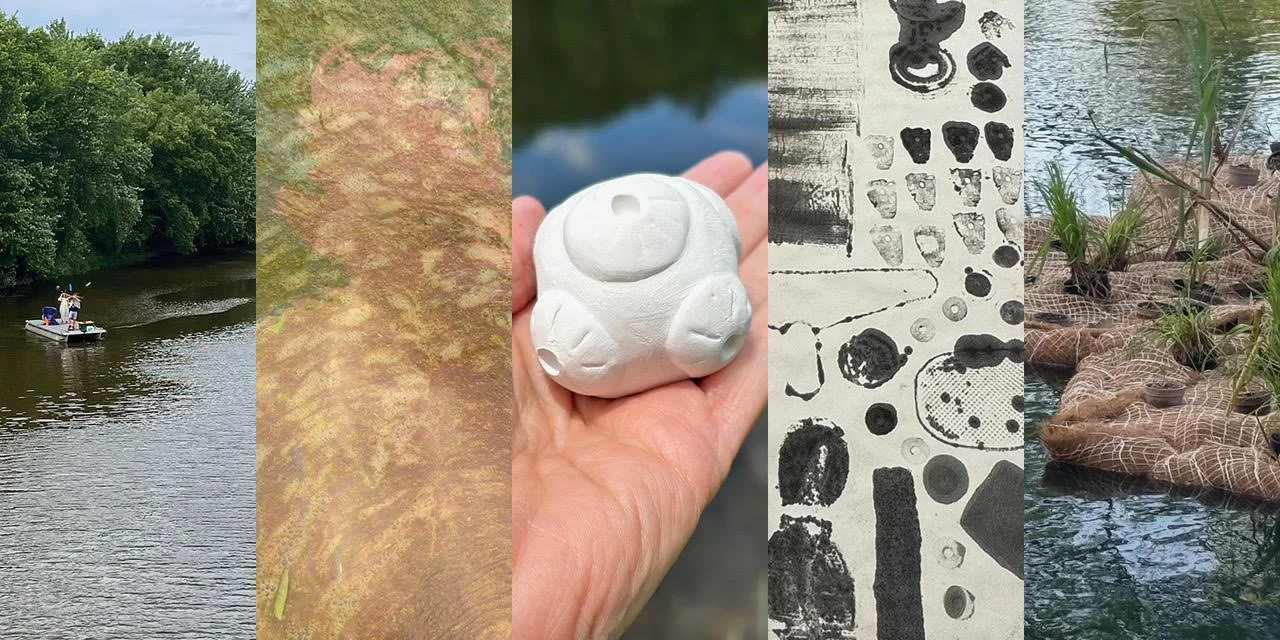
Wallkill Futures is a series of participatory, experiential public art projects with and for communities along the 88-mile-long Wallkill River in New York’s Hudson Valley. As climate change sparks investment vehicles that extract value based on future scarcity or availability of water, this project is a platform for artist experiments in mobilizing social investment in water futures.
Artists: Matthew Friday• sTo Len• FICTILIS• Lize Mogel• Nancy Nowacek
The Wallkill River crosses multiple administrative boundaries and geologies to eventually spill into the Hudson. Its water is used for irrigation and hydropower, but also relied on for recreation and habitat. This is not the “charismatic megalandscape” of rivers — that honor goes to the nearby Hudson, or the Colorado, or the Mississippi. It’s a workaday river, one like those that exist all over the US — somewhat loved, mostly disregarded, voiceless. But as the warming planet impacts these “ordinary” rivers, their potential role in climate adaptation multiplies and ripples outward, and intervention becomes critical.
Through embodied research, workshops, performances, an exhibition, and local engagement, Wallkill Futures artists create essential points of connection to the river, offering creative ways to invest in its future resilience. Join us for Wallkill River encounters, events, and workshops throughout the run of the exhibition..
Wallkill Futures is initiated and directed by Lize Mogel. Community partners include the Wallkill River Watershed Alliance, the Hudson River Watershed Alliance, Wallkill Valley Land Trust, and others.
For more information please visit wallkillfutures.com
Wallkill Futures is funded in part by a 2024 Our Town grant from the National Endowment for the Arts.
Events - Free & Open to the Public
-
Future Waters Commons
Sunday, June 14th: Natural Dyeing Workshop - 1:00 to 3:00 pm
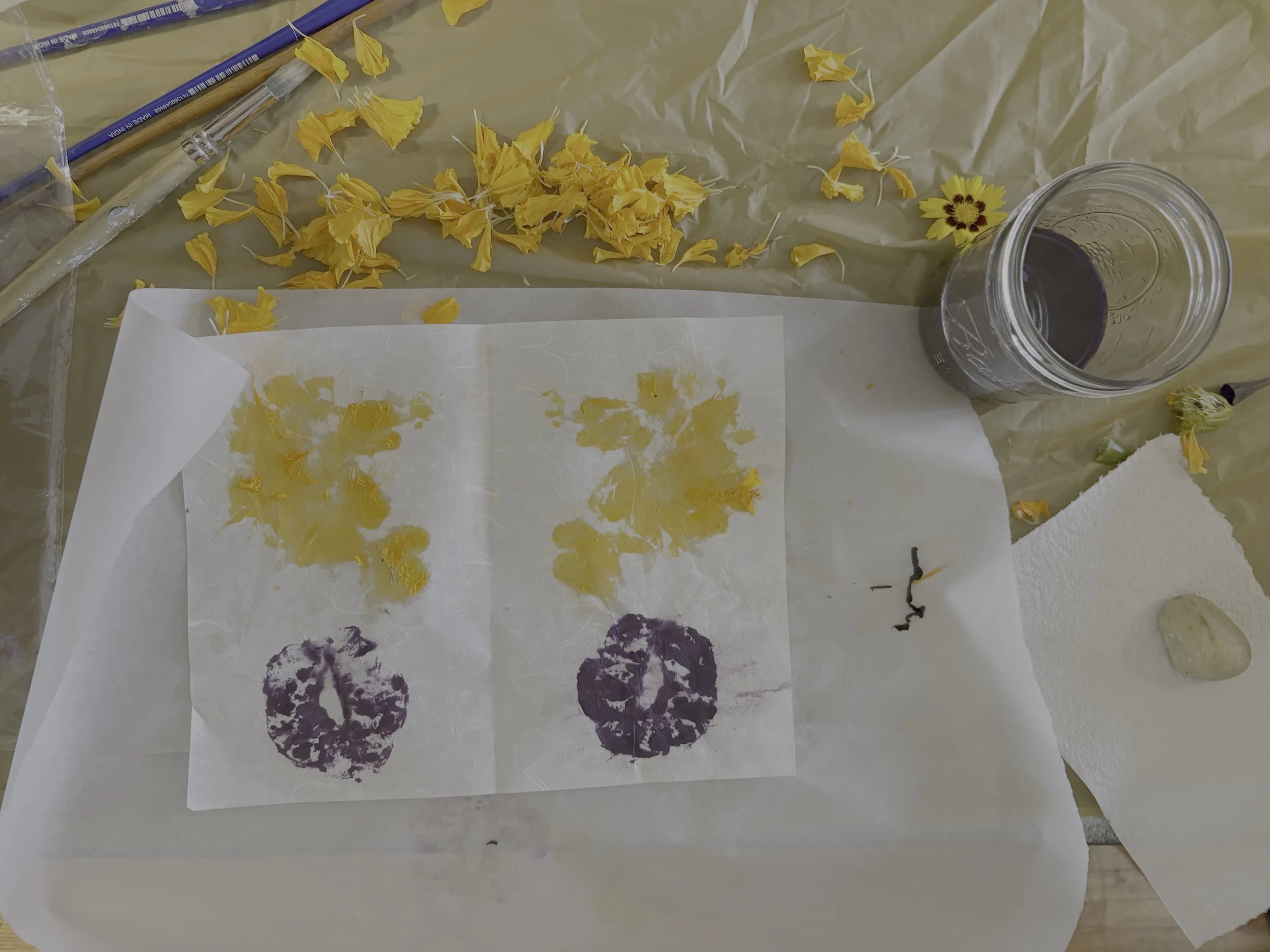
@Carmine Liberata BridgeThis coming Sunday as part of the New Paltz Regatta, members of the ecological design collective @spurse01 including @matthewfriday68 and @iainkerr in collaboration with @carolannpaszek will host a natural dyeing workshop to build biodegradable origami boats that will carry seeds selected to stabilize eroded riverbeds. Come find us at the Carmine Liberata bridge in New Paltz!
Future Waters Commons reimagines rivers as shared ecological commons and sites of collective learning. Using a repurposed boat as a floating research platform and classroom, the project brings students, artists, educators, and community members into direct engagement with the Wallkill river through storytelling, creative practice, and ecological exploration. The boat will serve as a centerpiece for public engagement during the New Paltz Regatta and upcoming events in Kingston.
This project is part of WALLKILL FUTURES, a series of participatory, experiential public art projects hosted by the Unison Art Center with and for communities along the 88-mile-long Wallkill River in New York’s Hudson Valley. As climate change sparks investment vehicles that extract value based on future scarcity or availability of water, this project is a platform for artist experiments in mobilizing social investment in water futures. Directed by @walking_the_watershed, and includes @stoishere, @matthewfriday68, @nancynowacek and Fictilis.
-
Power Objects & (Im)Possible Demands: A Wallkill Ritual
Saturday, June 13th: Power Object Sculpture Workshop - 2:00 to 3:30 pm
@Unison ArtsSaturday, July 18th: A Wallkill Ritual to Invoke the Future - 10:30 to 11:15 am
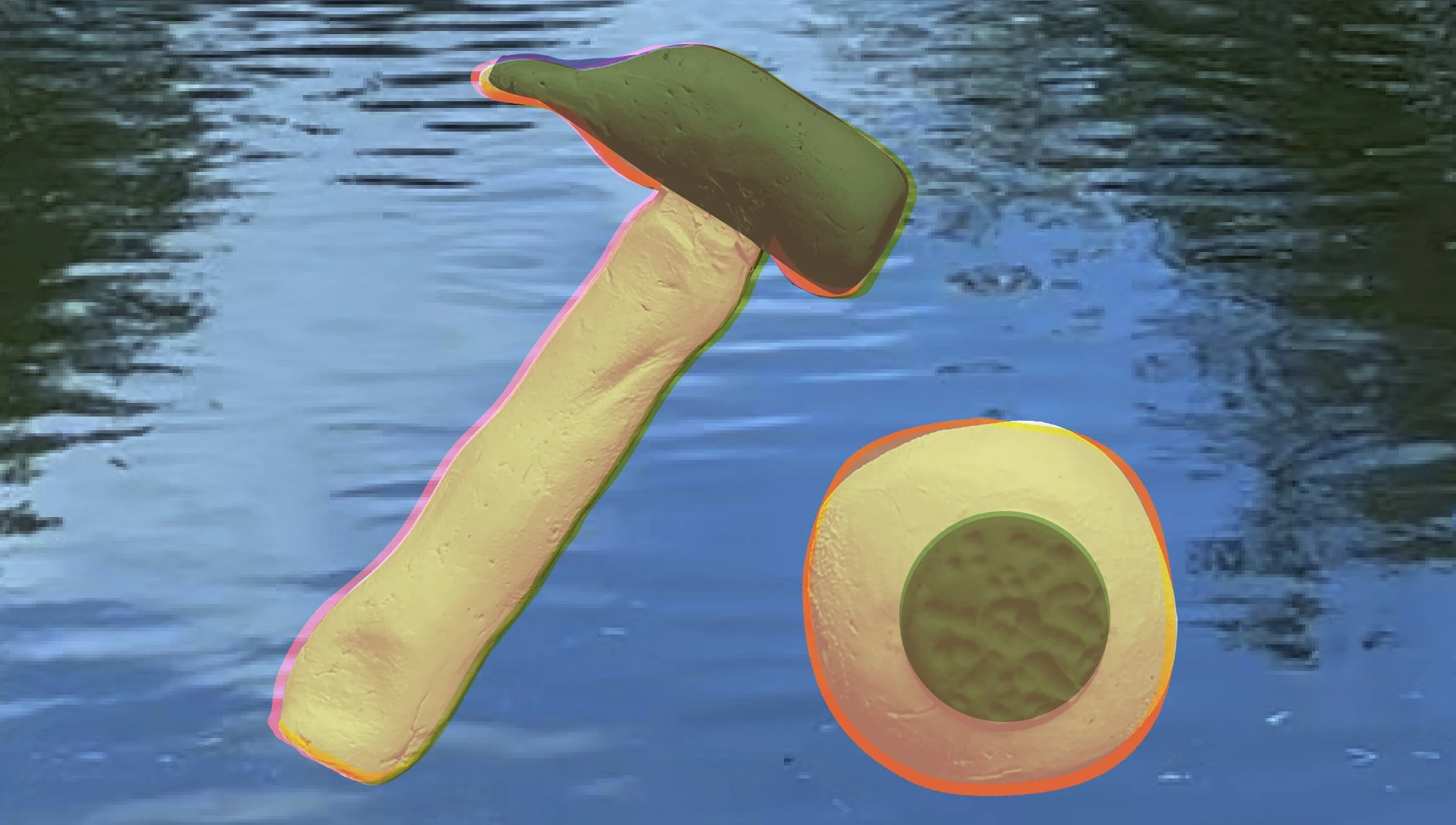
@Sojourner Truth Park: 55 Plains Rd, New PaltzInspired by ancient rituals and contemporary political unrest, this workshop invites participants to sculpt small clay objects that represent a need or desire for transformative change, working in kinship with the Wallkill River and the more-than-human world.
Each sculpture will be molded to create a power object.
On July 18, a procession will lead people to the Wallkill, where they can cast a power object into the river in a gesture of collective intention and possibility. Each object will flow through the Wallkill to the Rondout, the Hudson, the Atlantic, and beyond, summoning the unseen forces that encircle the planet.
No prior experience is needed—only a deep desire for change.
Participation in the July 18 event is optional.
Sculptures will be available to take home after July 17.
Led by artist Nancy Nowacek with MJ Nusbaum
Nancy Nowacek is an interdisciplinary artist researching climate change, health, aging, and their intersection.
MJ Shepard-Nusbaum is a printmaker, papermaker, sculptor, and educator working at the intersection of art, ecology, and community.
-
Liquid Futures workshop
Three dates:
Saturday, June 13th - 10:00 am to 1:00 pm
Saturday, June 20th - 10:00 am to 1:00 pm
Saturday, July 18th - 1:00 to 4:00 pm
@Unison ArtsWhat does the social, environmental, and political ecology of the Wallkill River look like 50 years from now, 100 years from now, 1000 years from now, after climate change? Join a workshop with Wallkill Futures artist Lize Mogel to imagine fantastic scenarios about the future of the Wallkill River, and to create short videos enacting those speculative futures in, on, and around the river.
During this 3 hour workshop, we’ll brainstorm ideas, write outlines, make costumes and props, learn easy in-phone editing. If there’s time we’ll go to the Wallkill River to film.
Bring: your ideas, fun materials for props/costumes, your smartphone (or other kind of video camera).
Materials, costumes, snacks & drinks provided.
Selected videos will be shown as part of the Wallkill Futures exhibition at Unison (opening July 17), in a special screening on August 22, and in future exhibitions & screenings.
-
Floating Treatment Wetland Design / Build / Install Workshop
Saturday, May 16th - 3:00 to 5:00 pm
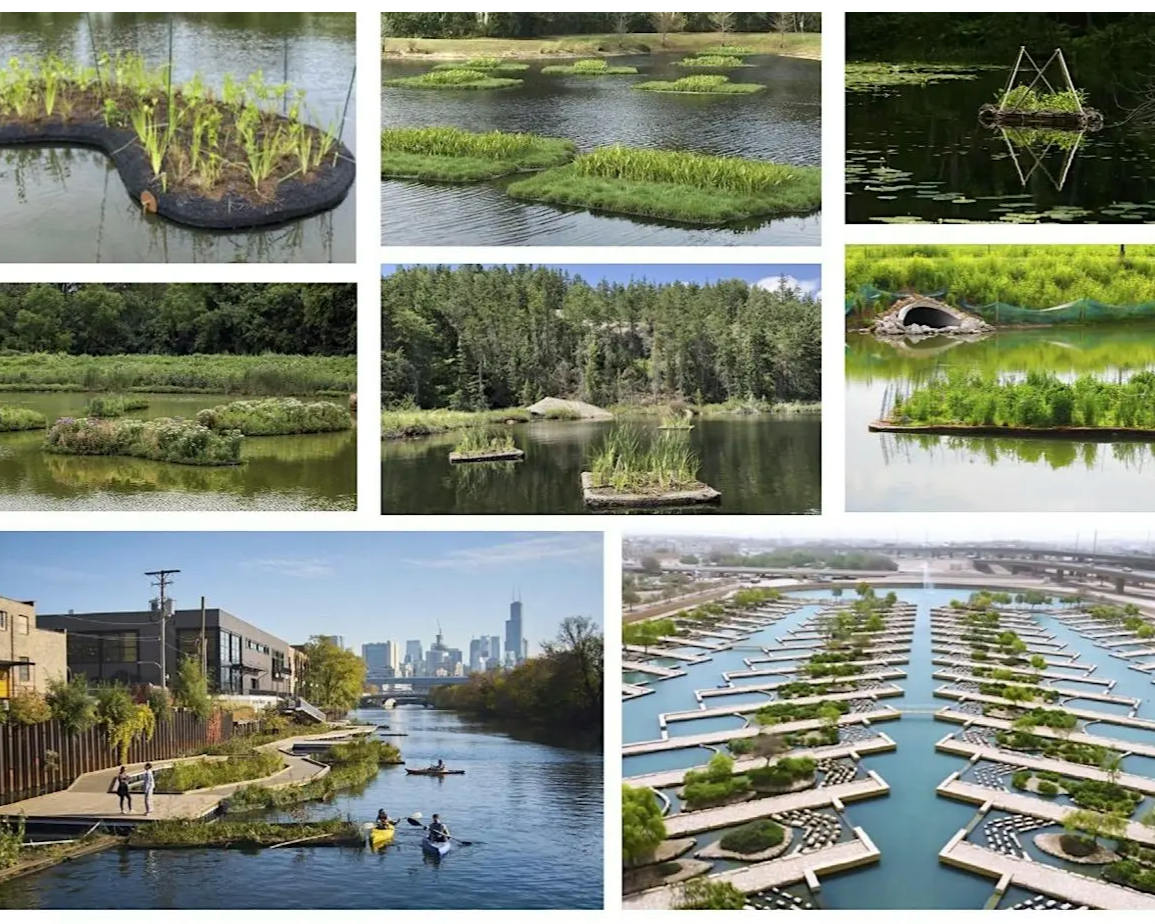
@DeJoux HouseLearn to design, build, and install floating treatment wetlands with locally available and inexpensive biomaterials for water stewardship!
Friends and stewards of the Wallkill River and New Paltz neighbors are invited to join this free workshop to learn about the ecological benefits of Floating Treatment Wetlands, and build and install a series of prototypes in the scenic pond at the historic Dejoux House. Led by FICTILIS studio, as part of the Wallkill Futures exhibit opening in July at Unison Arts, the workshop will cover materials, tools, plant species,water testing, and best management practices, equipping participants with the knowledge and hands-on skills to create their own FTWs for the waters they steward.
Floating Treatment Wetlands are small raft-like buoyant structures used for mitigating nutrient and chemical pollution in waterways through root and microbial uptake, mitigating algae and harmful bacteria, turning nutrients to usable and sequestrable biomass, as well as providing wildlife habitat and a self-watering growing medium for native sedges, willow, and other species for use in riparian restoration planting. We are studying locally-sourced, low-cost designs for scalable FTW applications in HAB prevention, stormwater and wastewater pollution, and pre-and post-treatment of agricultural irrigation and runoff, and other remediation of rural and urban waters.
Artist Blurbs
Matthew Friday: Future Waters Commons reimagines rivers as shared ecological commons and sites of collective learning. Using a repurposed boat as a floating research platform and classroom, the project brings students, artists, educators, and community members into direct engagement with the Wallkill river through storytelling, creative practice, and ecological exploration. The boat will serve as a centerpiece for public engagement during the New Paltz Regatta and community events with the Midtown Kingston Arts District. The project responds to increasing urbanization, pollution, and climate instability by reconnecting communities with the rivers that shape their futures through environmental stewardship and collective action. Matthew’s website.
Nancy Nowacek: Inspired by ancient practices and contemporary political discord, Power Objects and Impossible Demands invites participants to sculpt small objects in clay that symbolize a need that seems unmeetable and/or a desire for power to make change in kinship with the more-than-human world. Nancy’s website.
sTo Len: sTo Len has been collecting impressions of the Wallkill River through an embodied research approach that has included walks, paddles, audio field recordings, photographs, drawings, and conversations. Len recently collaborated with Riverkeeper and Climate Smart Gardiner on their 15th Annual Clean Up where participants picked up garbage and helped choose special trash items for sTo that they deemed still had “art potential.” Len will be using these objects for a series of prints and sculptures that give visibility to the trash that winds up in our parks and on our coastlines while celebrating the work of community-led actions that protect the local watershed. sTo’s website.
FICTILIS: Floating Treatments is a series of experiments in community water stewardship that propose novel designs for “floating treatment wetlands”– rafts with plants that help clean water - using sustainable and abundant biomaterials. Through a series of design/build workshops with local residents, farmers, and other river users, followed by installation and monitoring at several sites near the Wallkill River, the project invites inhabitants of this diverse watershed to combine innovative bioengineering techniques with ancient Meso-American methods, and to see the river as a growing medium for the re-cultivation of local aquacultural tradition. FICTILIS’s website.
Lize Mogel: What does the social, environmental, and political ecology of the Wallkill River look like 50 years from now, 100 years from now, 1000 years from now, after climate change? The project invites people to create fantastic scenarios about the future of Wallkill River, and to make short videos enacting those speculative futures in, on, and around the river. Lize’s website.
Selected videos will be shown during the exhibition and in a special screening on August 22. You can make a video on your own, or join a workshop between June and August.
Unison’s programming is made possible by the New York State Council on the Arts with the support of the Office of the Governor and the New York State Legislature.
